I used to think a vision board was a decoration. A collage of nice pictures, pinned to a wall, that you admired for a week and then stopped seeing. Then the year my plan fell apart, the board was the only part of it that kept working.
It was not a dramatic collapse. Nobody gets a dramatic collapse. What happened was slower and harder to notice: the job I had counted on did not come through, the savings I had planned to build stayed flat, and the goals I had written down in January started to feel like evidence against me. Every time I looked at my list, I heard the same voice: you said you would do this, and you did not. So I stopped looking at the list. That is what most of us do when a plan fails — we quietly stop looking at it, and then we quietly stop believing in it.
The board stayed on the wall, though, because it was not a list. It was pictures. And pictures do something a list cannot do: they remind you how you want to feel, not just what you want to achieve.
A list is a contract — break it, and you feel guilt. A board is a picture of a life — when life goes off-script, it does not accuse you, it waits. Put feelings on it, not just outcomes. Keep it where you actually look. Review it every three months and let it change. On a hard day, a good board feels like encouragement, not an exam.
The difference between a list and a board
A list is a contract with yourself, and when you break a contract, the natural response is guilt. A board is a picture of a life, and when life goes off-script, a picture does not accuse you. It just waits.
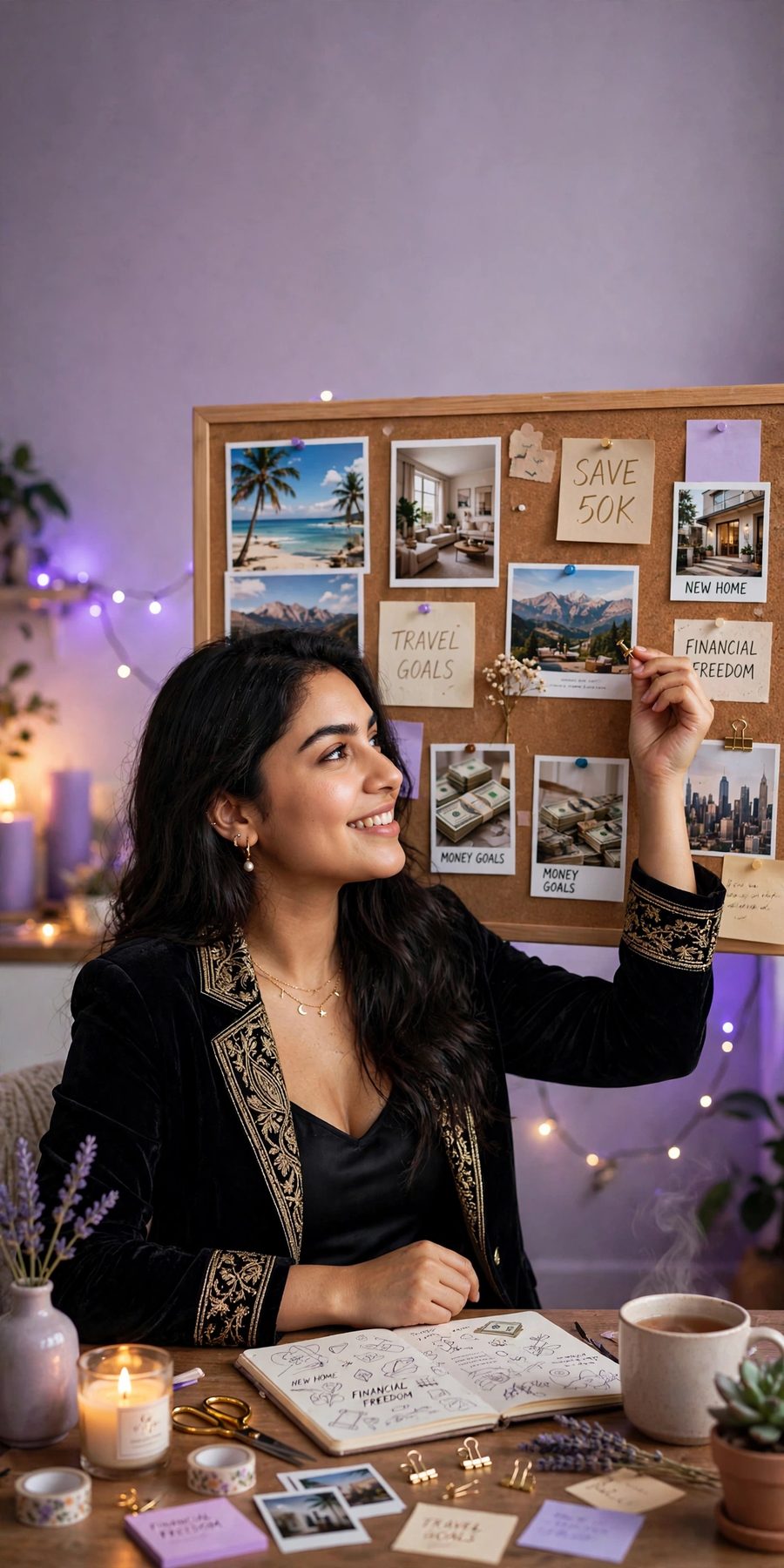
Mine had a photo of a small desk by a window, because I wanted a quiet place to work. It had a picture of a morning walk, because I wanted to start my days outside instead of inside my phone. It had a bookshelf, because I wanted to finish books instead of starting them. None of these were big dreams. None of them required a promotion or a windfall. They were small, ordinary pictures of a life I wanted — and that turned out to be exactly why the board survived when the plan did not.
When the big goals stalled, the small pictures were still reachable. I could not fix my career in a week, but I could move my desk near the window. I could not rebuild my savings in a month, but I could take the morning walk. Each small thing I did made the board feel a little less like a fantasy and a little more like a description of my actual days. And that is the first thing a vision board teaches you, if you let it: progress does not have to be dramatic to be real.
What I do differently now
I still make a board. I make one every year, and I have learned a few things about making one that actually helps when things go wrong.
First, I put feelings on it, not just outcomes. A picture of a calm morning is more useful than a picture of a pay cheque, because a calm morning is something I can create today. Outcomes depend on other people, on timing, on luck. Feelings depend mostly on me.
Second, I keep it where I actually look. A board in a drawer is a wish. A board on the wall beside my desk is a daily question: what is one small thing I can do today that points this way? Some days the answer is real work. Some days the answer is just the walk. Both count.
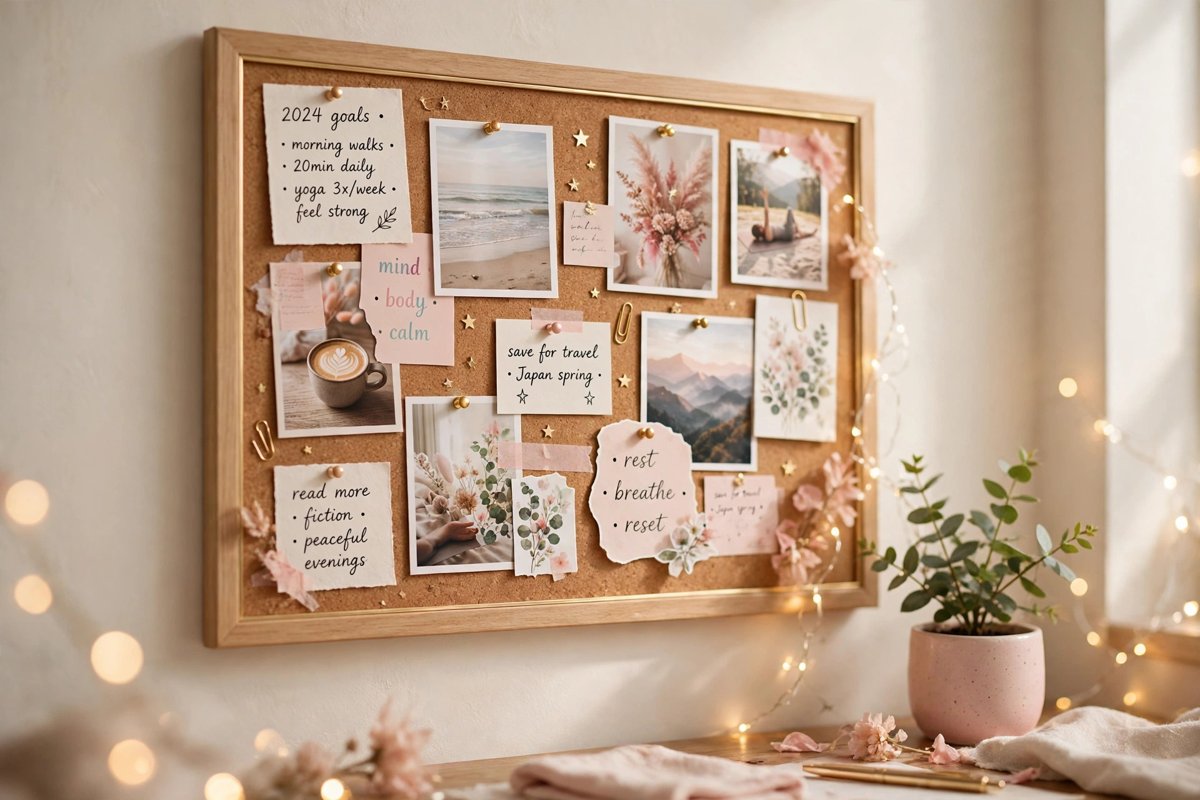
Third, I review it every three months, and I am allowed to change it. This was the hardest lesson. I used to treat the board as a promise I could not break, so when a goal stopped fitting my life, I felt like a failure for outgrowing it. Now I treat the board as a conversation. If a picture no longer feels like me, I take it down and put up one that does. The board is supposed to serve the life, not the other way round.
The quiet test
Here is the test I use now, and it is a simple one. On a hard day, look at your board and ask: does this make me feel one step closer, or one step behind? If it makes you feel behind, the board is wrong, not you. Change the board. A good vision board should feel like encouragement, not like an exam you are failing.
My plan fell apart that year. The board did not fix the plan. What it did was smaller and more important: it kept me doing the small things that made the next plan possible. The desk by the window. The morning walk. The finished book. None of them showed up on a spreadsheet. All of them showed up in my life.
If your year has not gone the way you planned, do not throw the board away. Look at it again — and ask it a kinder question. Not "why haven't I done this yet?" but "what is the smallest piece of this I can live today?" That is where positive thinking stops being a slogan and starts being a practice: one small picture, one small day at a time.
A goal list vs a vision board
Both tools earn their place — but they behave very differently in a hard year:
| A goal list | A vision board | |
|---|---|---|
| What it shows | Tasks, deadlines, numbers | How you want your life to feel |
| When plans change | Feels like a broken contract | Waits — then adapts with you |
| On a hard day | Evidence against you | Encouragement to keep going |
| Small steps | Invisible until the big goal lands | Visible, and doable today |
| How you review it | Rewrite it every January | Refresh the pictures every three months |
About the author: Muhammad Zahid Ghaffar is the founder of Dream Board Daily, where he writes about vision boards, goal setting and finishing what you start — one small step at a time. Start with the free 2027 Vision Board Starter Pack, or read the step-by-step guide to making a vision board for 2027.